
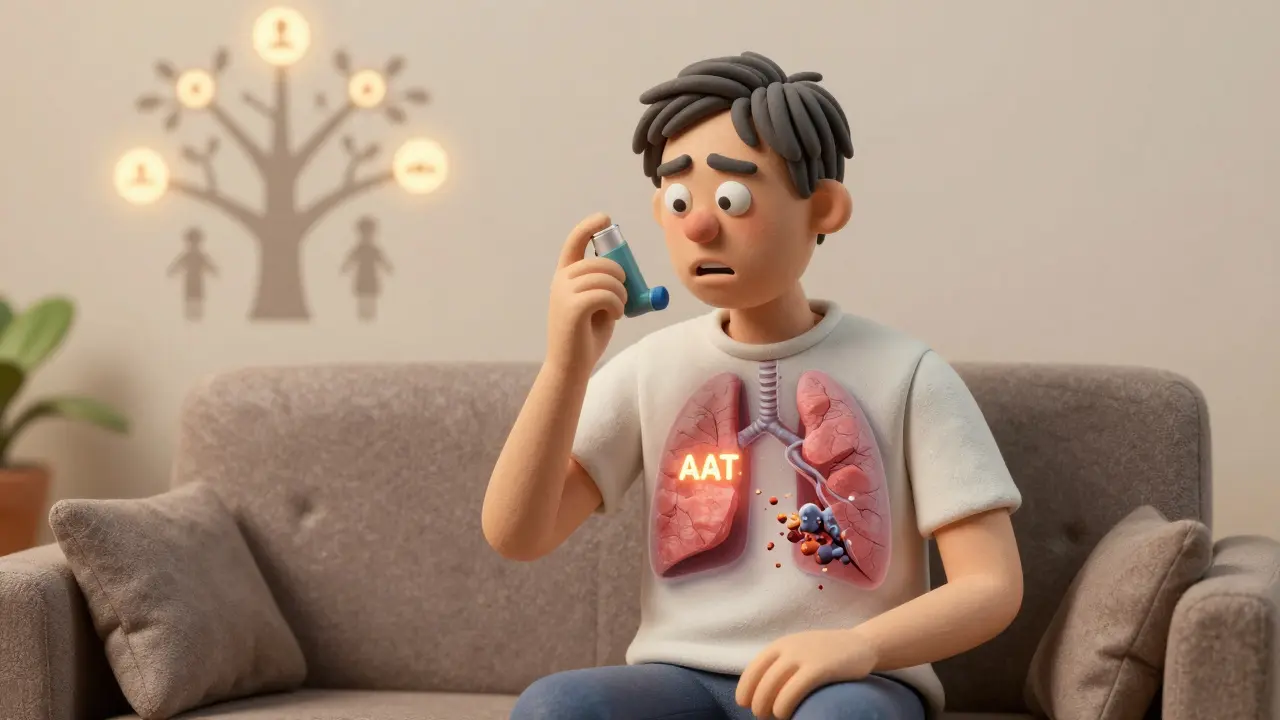
Most people think of COPD as something that happens to long-term smokers. But what if you never smoked, never lived near heavy traffic, and still started struggling to breathe in your 30s or 40s? For some, the answer lies in a quiet, hidden genetic flaw called Alpha-1 Antitrypsin Deficiency - or AATD. It’s not rare. It’s just overlooked.
What Is Alpha-1 Antitrypsin Deficiency?
Alpha-1 antitrypsin (AAT) is a protein made in the liver. Its job? To protect your lungs. Specifically, it blocks an enzyme called neutrophil elastase - a natural part of your immune system that breaks down damaged tissue. But when there’s too much of it and not enough AAT to stop it, your lung tissue gets eaten away. That’s emphysema. And when it happens before age 45, with no clear smoking history, it’s often AATD.
This isn’t a random glitch. It’s inherited. The problem comes from mutations in the SERPINA1 gene a gene on chromosome 14 that codes for the alpha-1 antitrypsin protein. The most common bad version is called the Z allele. If you inherit two copies - one from each parent - you have the ZZ genotype. That means your liver makes very little functional AAT. Your blood levels drop to just 11-17 mg/dL, compared to the normal 100-200 mg/dL. At that level, your lungs are defenseless.
But it’s not just the lungs. The same faulty protein that doesn’t reach the lungs gets stuck in the liver. It clumps together, like tar. Over time, that damages liver cells. About 10-15% of people with ZZ develop cirrhosis. A smaller number end up with liver cancer. So AATD isn’t just a lung disease. It’s a liver disease too.
Why Is It So Often Missed?
Patients with AATD don’t usually go to the doctor with a genetic question. They go because they’re out of breath. They’re wheezing. They’ve been told they have asthma. Or chronic bronchitis. Or "early COPD." And because their symptoms look like smoking-related disease, doctors rarely look deeper.
The average time to diagnosis? Eight years. Eight years of being misdiagnosed. Eight years of being told to quit smoking - even if they never smoked. Eight years of using inhalers that don’t fix the root problem.
Research shows that up to 3% of all COPD cases in the U.S. are actually AATD. That’s tens of thousands of people. Yet only 10% of those with severe deficiency have been diagnosed. Why? Because testing isn’t automatic. Unless you’re tested specifically for it, you won’t find it.
The American Thoracic Society and European Respiratory Society say: test everyone with COPD. Test anyone with unexplained liver disease. Test anyone with a family history. But in real life, that doesn’t always happen. Many primary care doctors don’t think about AATD. And even when they do, the test isn’t always ordered.
How Is It Diagnosed?
The path to diagnosis is simple, but not always followed. It starts with a blood test: serum AAT level. If it’s below 11 μM (roughly 50 mg/dL), you need more testing. The next step is genotyping - looking at your DNA to see which version of the SERPINA1 gene you carry. Or phenotyping - a lab technique that shows what shape the protein takes.
The most common genotypes:
- MM - Normal. No deficiency.
- MZ - Carrier. One bad copy. Usually no symptoms, but smoking increases risk.
- ZZ - Severe deficiency. High risk for lung and liver disease.
- SZ - Moderate deficiency. Can still cause disease, especially with smoking.
It takes 2 to 6 weeks to get results. That wait can feel endless. But if you’re young, have low lung function, and no smoking history - this test changes everything.
How Is It Treated?
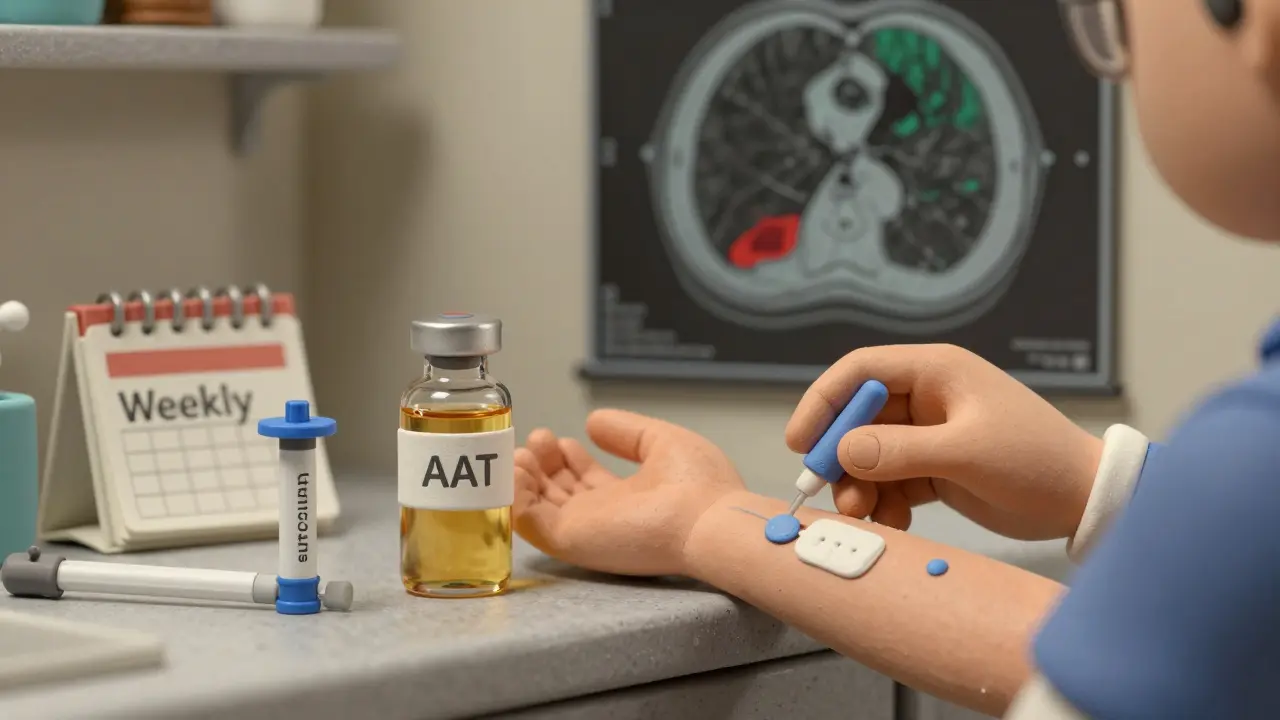
There’s no cure. But there is a treatment that replaces what your body can’t make: AAT augmentation therapy a weekly intravenous infusion of purified human alpha-1 antitrypsin protein to maintain protective levels in the blood.
The goal? Keep your blood AAT level above 11 μM. That’s the threshold shown in lab studies to stop lung damage. You get this treatment once a week - about 60 mg per kilogram of body weight. Products like Prolastin-C, Zemaira, and Aralast NP are FDA-approved. Each costs $70,000 to $100,000 a year. Insurance often fights it. Many claims are denied at first. You’ll need your doctor to appeal.
And then there’s the new option: subcutaneous infusion. In 2022, the FDA approved the first AAT treatment you can give yourself under the skin - not through a vein. It’s slower, but it’s easier. No more weekly clinic visits. No more IV access problems. This is a game-changer for people who work, travel, or just hate needles in their arm.
But here’s the hard truth: augmentation therapy doesn’t fix your liver. It doesn’t reverse scarring. It doesn’t bring back dead lung tissue. It only slows down the destruction in your lungs. And it only works if you start early - before too much damage is done.
What Sets AATD Apart From Regular COPD?
| Feature | AATD-Related Emphysema | Smoking-Related COPD |
|---|---|---|
| Typical Age of Onset | 35-45 years | 60+ years |
| Smoking History | Often none or minimal | Usually 20+ pack-years |
| Lung Damage Pattern | Bottom lobes (basilar) | Top lobes (apical) |
| Genetic Marker | Yes - SERPINA1 mutation | No |
| Family History | Often present | Usually absent |
| Response to Standard COPD Drugs | Partial - doesn’t stop progression | Can help manage symptoms |
The pattern of lung damage is different too. On a CT scan, AATD shows up as damage at the bottom of the lungs. Smoking-related COPD hits the top. That’s a big clue for radiologists - if they’re looking for it.
What Can You Do If You Have AATD?
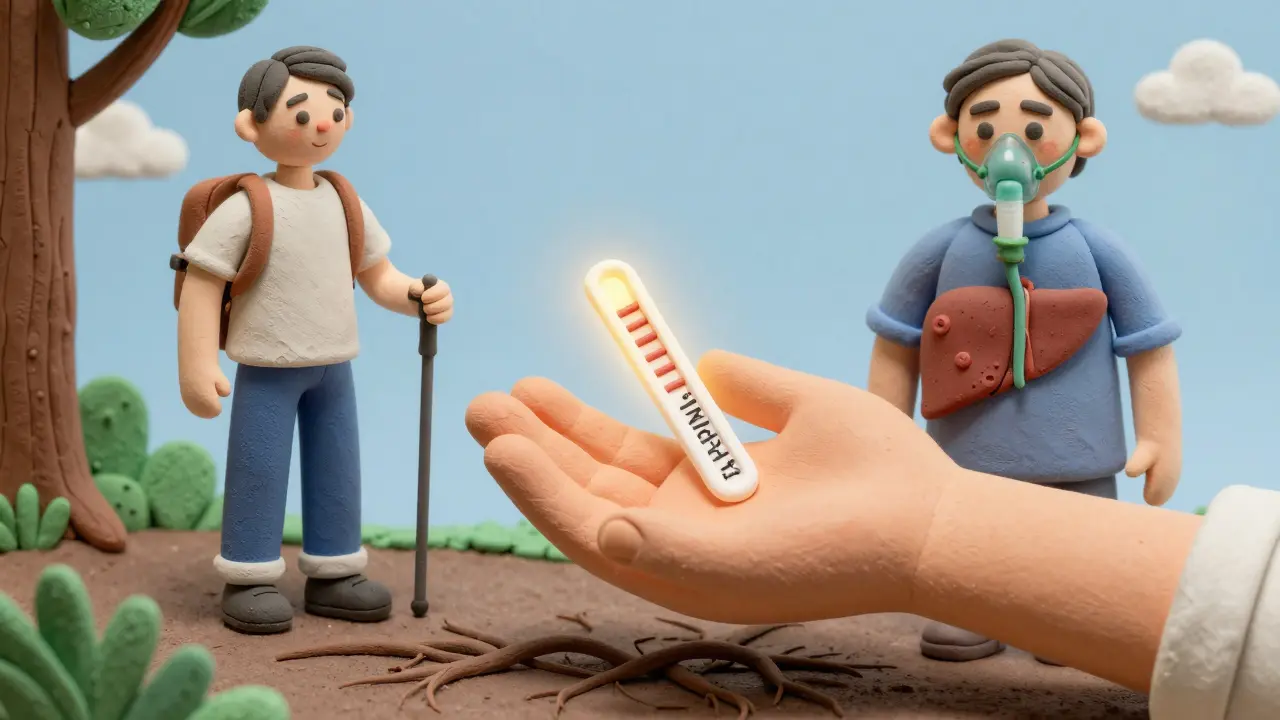
First: stop smoking. Immediately. If you have ZZ and keep smoking, you’ll likely develop severe emphysema by age 40. Quit, and you might live into your 70s with only mild symptoms. Studies show quitting cuts your risk of lung damage by up to 60%.
Second: get vaccinated. Flu. Pneumonia. Whooping cough. Every year. Your lungs are already fragile. Don’t give infections a chance.
Third: get tested. If you have AATD, your siblings, children, and parents should be tested too. It’s autosomal codominant - meaning your kids have a 50% chance of inheriting one bad copy. And if they marry someone with a bad copy too? Their kids could have ZZ. Genetic counseling helps families understand the risks.
Fourth: monitor your lungs. Get spirometry every 6 to 12 months. Track your FEV1. If it drops below 30% predicted, augmentation therapy becomes strongly recommended. If it’s above 65%, you might not need it yet - but you still need to protect your lungs.
What’s Next for AATD?
Right now, we’re treating the symptom - low AAT levels. But researchers are working on fixing the cause.
One approach: gene therapy. Insert a working copy of the SERPINA1 gene into liver cells. Early trials are showing promise.
Another: small molecule correctors. These drugs help the faulty Z protein fold right, so it doesn’t clump in the liver. That could protect both lungs and liver.
And then there’s newborn screening. Twelve U.S. states now test babies for AATD as part of routine metabolic panels. That means kids with ZZ get diagnosed before they’re even 1 year old. They can be told to never smoke. They can get monitored. They can get therapy before damage starts. That’s the future.
By 2030, experts predict that half of all AATD patients won’t need weekly infusions. They’ll have pills or injections that fix the root problem. That’s not science fiction. It’s happening now.
Final Thoughts
AATD is not a curiosity. It’s a common, treatable, underdiagnosed condition. It doesn’t care if you’re rich or poor. It doesn’t care if you’re young or old. It only cares if you have the gene.
And here’s the quiet truth: if you’ve been told you have COPD, asthma with fixed obstruction, or unexplained liver disease - and you’ve never smoked - you should get tested. Just once. A simple blood test. It could change your life. It could save your children’s lives too.
The system is slow. The costs are high. The awareness is low. But the science is clear. You don’t have to wait for a diagnosis to change your future. Start with a conversation. Ask your doctor: "Could this be AATD?"
Is Alpha-1 Antitrypsin Deficiency the same as COPD?
No. AATD is a genetic cause of COPD. Not all COPD is AATD. But about 3% of COPD cases are caused by this specific gene mutation. AATD leads to early-onset emphysema, often in non-smokers. Regular COPD usually shows up later and is tied to smoking or pollution. The treatments are different too - AATD has a targeted therapy that replaces the missing protein.
Can you get AATD if your parents didn’t have it?
No. AATD is inherited. You must get one bad copy of the SERPINA1 gene from each parent to develop the severe form (ZZ). If your parents didn’t carry the gene, you can’t have it. But you can be a carrier (MZ) without symptoms, and still pass the gene to your children. Many people with MZ genotype never know they carry it - until their child is diagnosed.
Does augmentation therapy stop liver damage?
No. Augmentation therapy only raises AAT levels in the blood to protect the lungs. It doesn’t fix the protein clumping in the liver. That’s why people with ZZ can still develop cirrhosis or liver cancer. There’s no current treatment for AATD-related liver disease other than monitoring and, in severe cases, a liver transplant. New drugs in trials aim to fix this, but they’re not approved yet.
How much does AAT augmentation therapy cost?
Annual costs range from $70,000 to $100,000 per patient. Most insurance covers it if you have a confirmed ZZ or SZ genotype and FEV1 between 30-65% predicted. But initial claims are often denied. You’ll likely need your doctor to appeal, with lab results and imaging. Some patients use patient assistance programs from drugmakers like CSL Behring or Takeda to reduce out-of-pocket costs.
Can you live a normal life with AATD?
Yes - if you’re diagnosed early and take action. Quitting smoking, getting regular lung checks, starting augmentation therapy on time, and avoiding lung irritants can let you live into your 70s or 80s with minimal symptoms. Many people with AATD work full-time, raise families, and travel. The biggest risk isn’t the gene - it’s delay. The longer you wait to act, the more damage accumulates.
Should I get tested if my sibling has AATD?
Yes. If your sibling has ZZ or SZ, you have a 25-50% chance of carrying the same genotype. Testing is simple: a blood test for AAT level, followed by genotyping. Even if you feel fine, knowing your status lets you make smart choices - like avoiding smoking, getting vaccinated, and monitoring your lung function. It also helps your children. Genetic counseling is recommended before testing family members.


