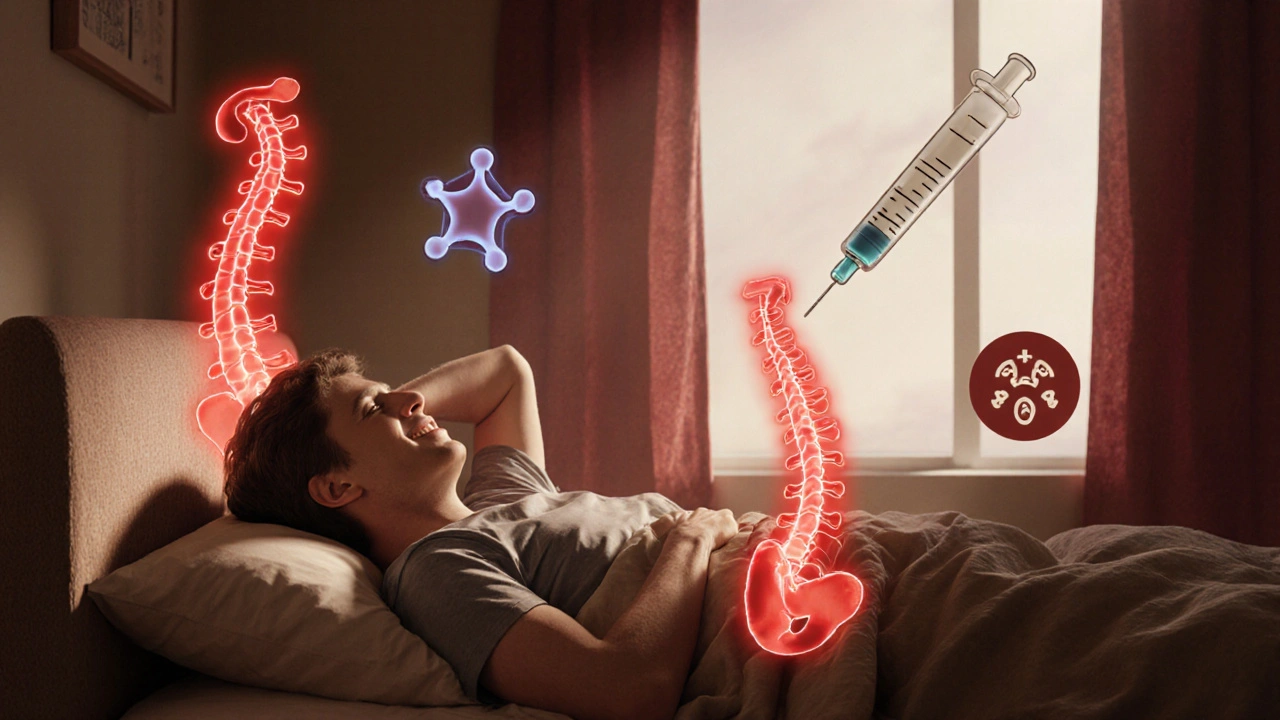
Ankylosing Spondylitis: Causes, Treatments, and Medication Insights
When your spine starts to stiffen and ache without clear reason, it might be ankylosing spondylitis, a long-term inflammatory disease that mainly targets the spine and sacroiliac joints, often leading to fusion of vertebrae over time. Also known as axial spondyloarthritis, it doesn’t just cause back pain—it can limit how far you can bend, breathe, or even stand upright without discomfort. Unlike regular back pain from lifting or sitting too long, this condition starts young—often in your 20s or 30s—and gets worse slowly unless managed.
It’s not just about the spine. ankylosing spondylitis, an autoimmune disorder linked to the HLA-B27 gene can also hit your eyes, heart valves, and intestines. People with this condition often have flare-ups where pain spikes, then calms down—sometimes for months. What makes it tricky is that early signs mimic common back problems, so many wait years before getting a real diagnosis. Blood tests and MRIs help confirm it, but there’s no single test that catches it every time.
Once diagnosed, the goal isn’t to cure it—it’s to keep you moving. NSAIDs, nonsteroidal anti-inflammatory drugs like ibuprofen or naproxen, are the first-line treatment because they reduce inflammation and ease pain. For many, that’s enough. But if pain keeps coming back, doctors turn to biologics, targeted drugs like adalimumab or etanercept that block specific immune system signals driving the inflammation. These aren’t cheap, and they need injections, but they can stop the disease from grinding your spine into a rigid rod.
Exercise isn’t optional here—it’s medicine. Stretching, swimming, and yoga keep your spine flexible and prevent the fusion that gives this disease its name. Physical therapy helps design routines that fit your life. Some people also use heat, posture training, or even acupuncture to manage daily discomfort. And while diet doesn’t cure it, cutting back on sugar and processed foods can help reduce overall inflammation.
What you won’t find in most guides is how medication timing and interactions matter. Taking NSAIDs with food reduces stomach damage, but it doesn’t always help absorption. Biologics can interact with other drugs, especially if you’re on antibiotics or supplements. Even something as simple as a vitamin D level can affect how well your body responds to treatment. That’s why so many of the posts here focus on how drugs behave in the body—how they’re absorbed, how they clash, and how to avoid hidden risks.
You’ll find real-world advice here: how to tell if your back pain is more than just bad posture, when to ask for an MRI, how biologics really work, and why some people stop responding to them over time. There are guides on managing side effects, what to do if your insurance denies a drug, and how to track symptoms so you can talk smarter with your doctor. This isn’t theory—it’s what people actually deal with when they live with ankylosing spondylitis every day.